Success story
30+
Young artists and 40 works, free and open to the public for a month.
The Story

“Heritage and New Voices: The Pulse of a New Generation” is organized by aolab (Assorted Objects Design Consulting Co., Ltd.) and co-organized by the Shanghai Printing Technology Research Institute and the Shanghai Printing Font Exhibition Hall. The exhibition runs from March 1 to March 31, 2024 at Character Space, 1st Floor, Shanghai Printing Technology Research Institute, No. 60, Lane 1209, Xinzha Road, Jing’an District, Shanghai. It is free and open to the public, daily from 12:00 to 19:00.
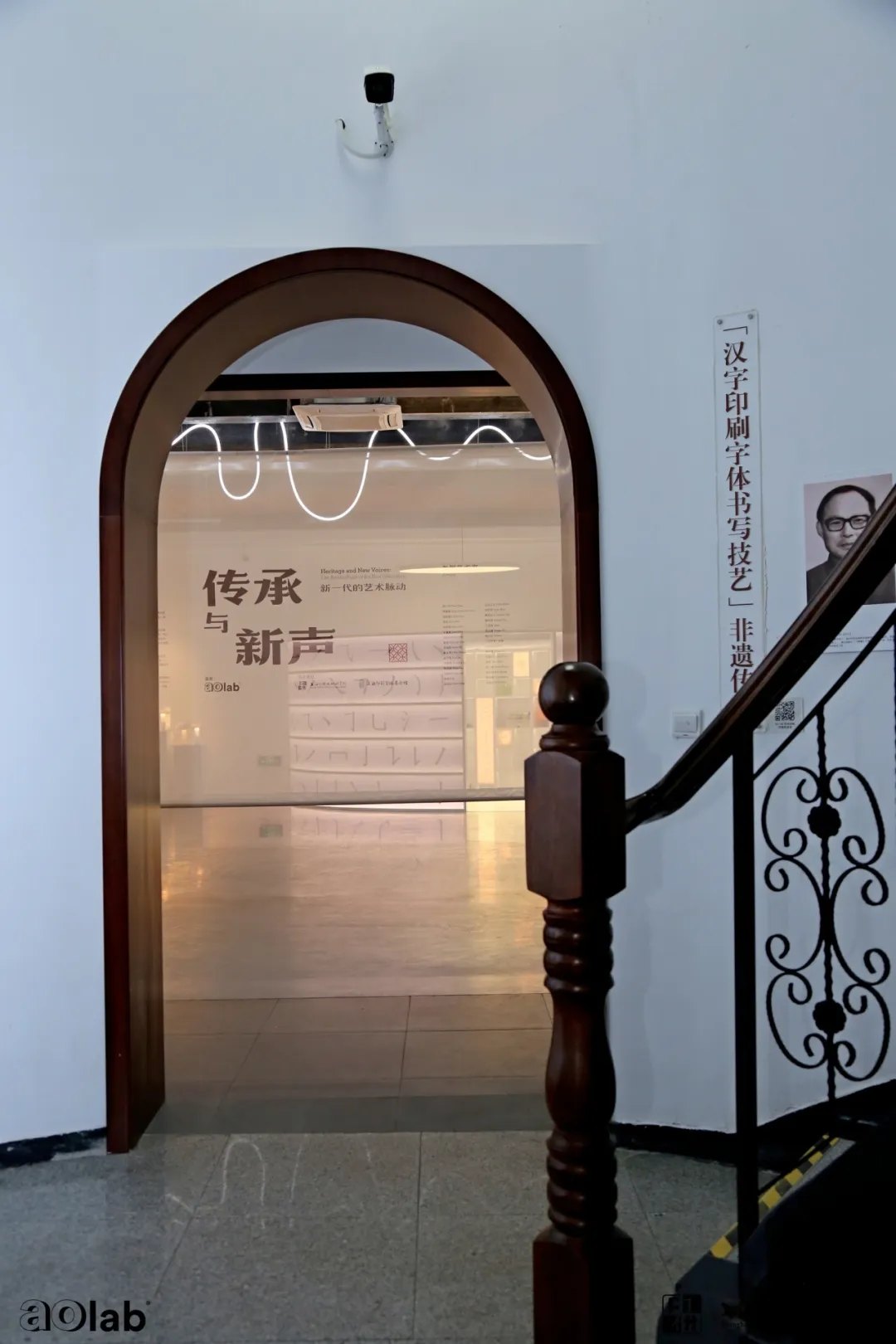
Heritage and New Voices: The Pulse of a New Generation
The exhibition sets out to explore a dialogue between history and the present, showing how traditional craft comes alive again in the hands of a new generation of makers and writes a new movement in the symphony of our time. In the work of these pioneering artists, age-old techniques are no longer images held in memory; they become a bridge between past and future, telling the stories of one generation after another. Each piece is a vessel of time that carries the wisdom and memory of the past. The artists read tradition from a modern point of view and reshape the classics with new methods, so that every work feels like a conversation across time and space. The exhibition is a celebration of culture and a tribute to art shaped by time and forged by history.
It is not only a showcase but an exploration: of how ancient techniques can shine again in today’s society, and of how they can become a link between different eras and cultures. Here we set out together on a journey through time, to feel tradition and modernity merge and to experience the new charm of traditional craft. In the artists’ new voices, we rediscover melodies both familiar and strange, and witness together the rebirth and transformation of a culture.


Swipe left or right to see the exhibition space.
The exhibition builds a platform for a new generation of makers devoted to traditional craft, exploring a deep dialogue between history and the present and showing the creative energy traditional art finds in a new era. It calls together artists from many fields, draws their attention to traditional craft and sparks their passion to create, bringing tradition and modernity together. While celebrating and passing on the beauty of traditional craft, it lets a new generation of artists express respect for traditional culture and their own ideas of innovation, helping that culture carry on and grow. The exhibition also offers a space for artists to meet, exchange ideas and work together. It encourages dialogue across disciplines, sets off encounters between traditional craft and modern innovation, and supports collaboration across fields. Through the exhibition, we hope to draw public attention to traditional craft, help this precious cultural heritage win wider recognition today, and create a deeper resonance in society.


Opening day
“Heritage and New Voices: The Pulse of a New Generation” brings together more than 30 artists and 40 works, several of them flown in from overseas for the show. The artists graduated from leading art schools in China and abroad.

Chunhan Liu
Kite Flowers
Kite
Chunhan Liu’s Kite Flowers uses the kite to express a lasting longing for nature. Working with a Weifang kite workshop that carries on this intangible cultural heritage, the artist combines flower and plant forms with bamboo frames baked through three special steps and precise one-piece paper mounting, giving the traditional craft a new form.
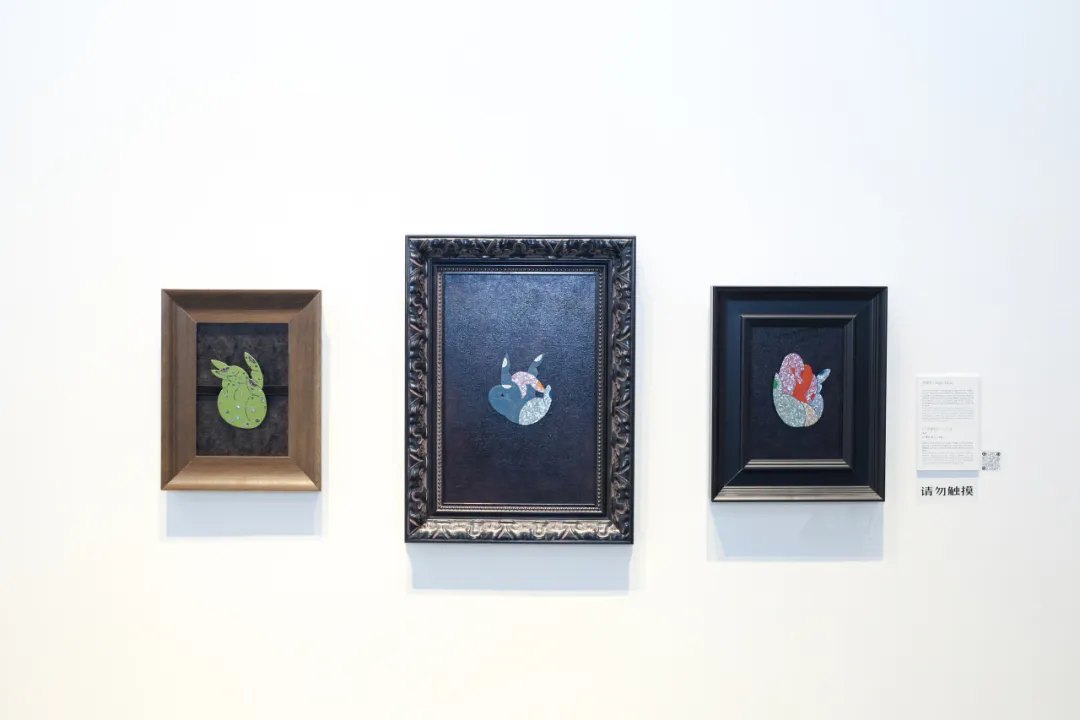
Yiqiao Zhou
Orchid Fingers I, Nos. 1–3
Lacquer painting
Wood, mother-of-pearl, eggshell, dry lacquer powder
In the series Orchid Fingers I, Nos. 1–3, Yiqiao Zhou uses lacquer, a medium rich in craft character, to trace the “orchid finger” gesture as people picture it. Traditional eggshell and mother-of-pearl inlay, along with Kyoto opal sheets, a newer craft material, are cut and recombined into different finger shapes.

Chloe Huang
The Snake Demon
Paper cut
The Snake Demon is inspired by the nine-headed, serpent-bodied creature from the Classic of Mountains and Seas. With a blue-green human face, it serves the water god Gonggong; it likes to collect trophies from its kills and keeps human habits. The work draws on ancient bronzes and totems related to snakes, and on images of snakes from the indigenous cultures of southern China. Built on traditional Chinese paper cutting, it uses laser cutting to bring back the fine detail of the art.

Siting Liu
Bound
Mineral pigment painting
Watercolor, mineral pigments, cotton paper
Through the theme “I was born free, yet I live in bonds that are everywhere,” Siting Liu’s Bound explores freedom and constraint in life.
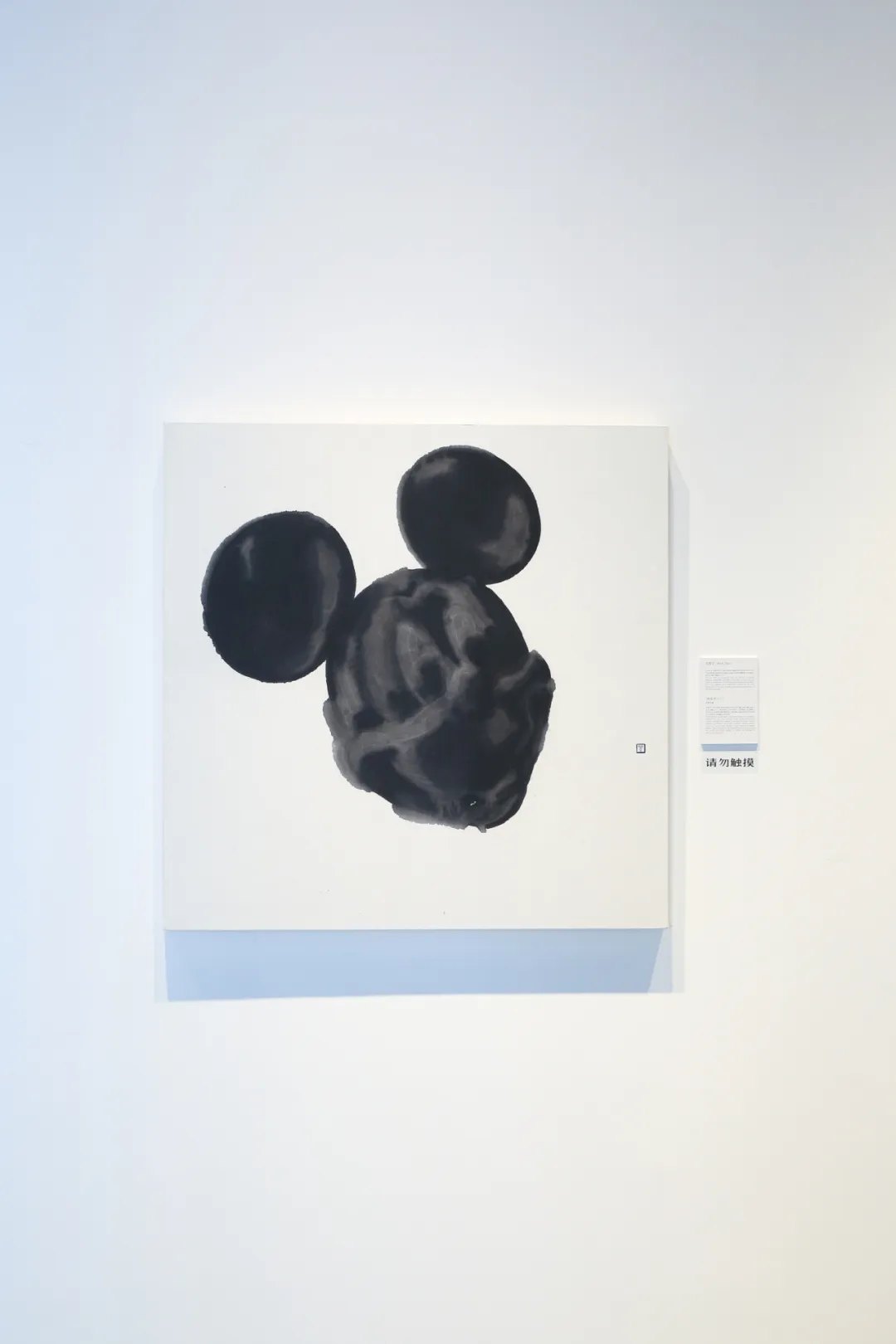
Rich Zhu
Objects No. 18
Ink on rice paper
Rich Zhu has long been interested in the boundary between the real world and the virtual one. Where is that boundary? Objects No. 18 starts from “object images” that are widely known in both worlds, images that carry a shared visual memory for people, and uses the language of ink to string the memories of the two worlds together and blur the line between them.
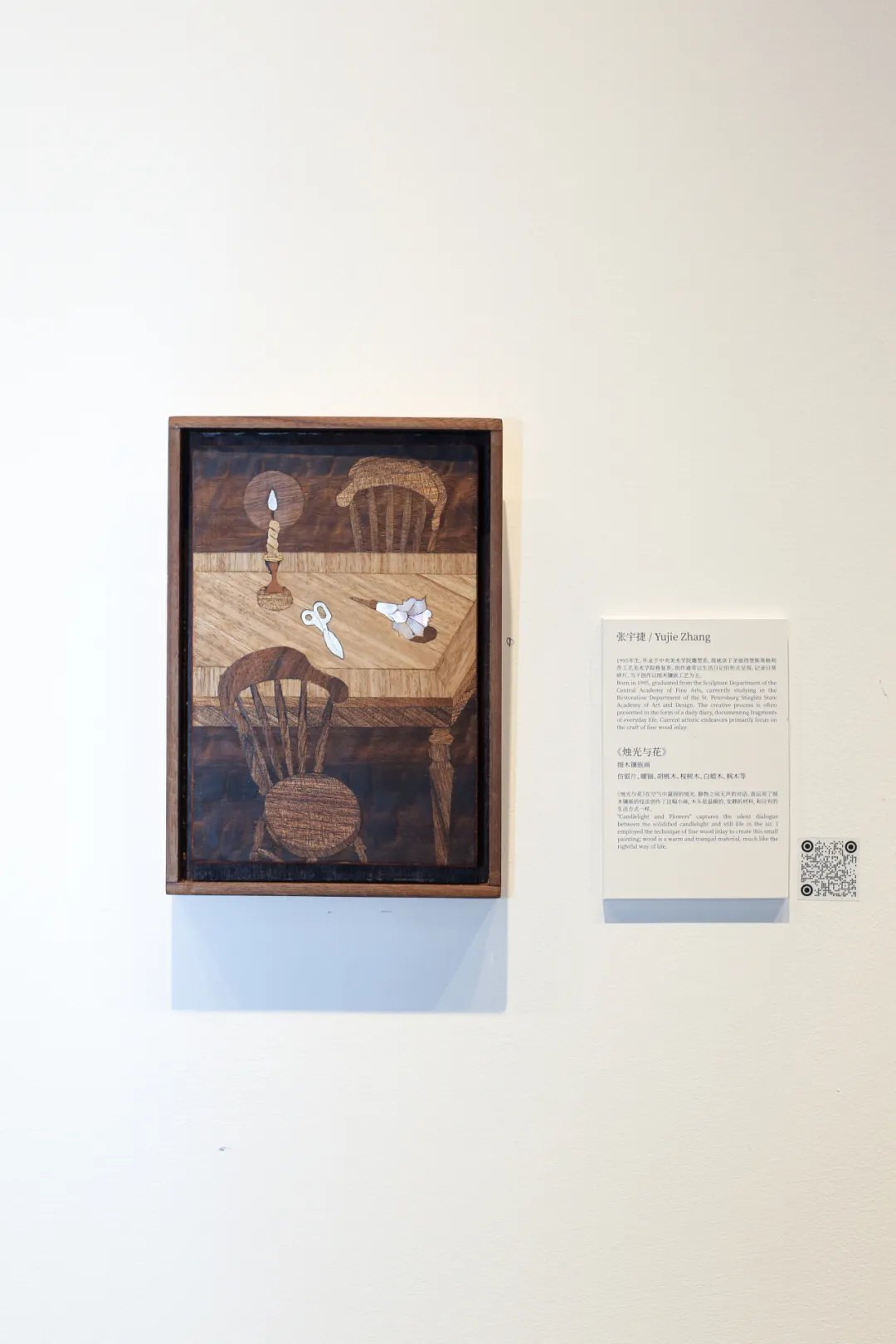
Yujie Zhang
Candlelight and Flowers
Wood marquetry
Imitation silver leaf, mother-of-pearl, walnut, eucalyptus, ash, maple and other woods
Yujie Zhang’s Candlelight and Flowers: candlelight frozen in the air, a silent conversation between still-life objects. The artist made this small picture in fine wood marquetry. Wood is a warm, quiet material, just like the way of life it suggests.
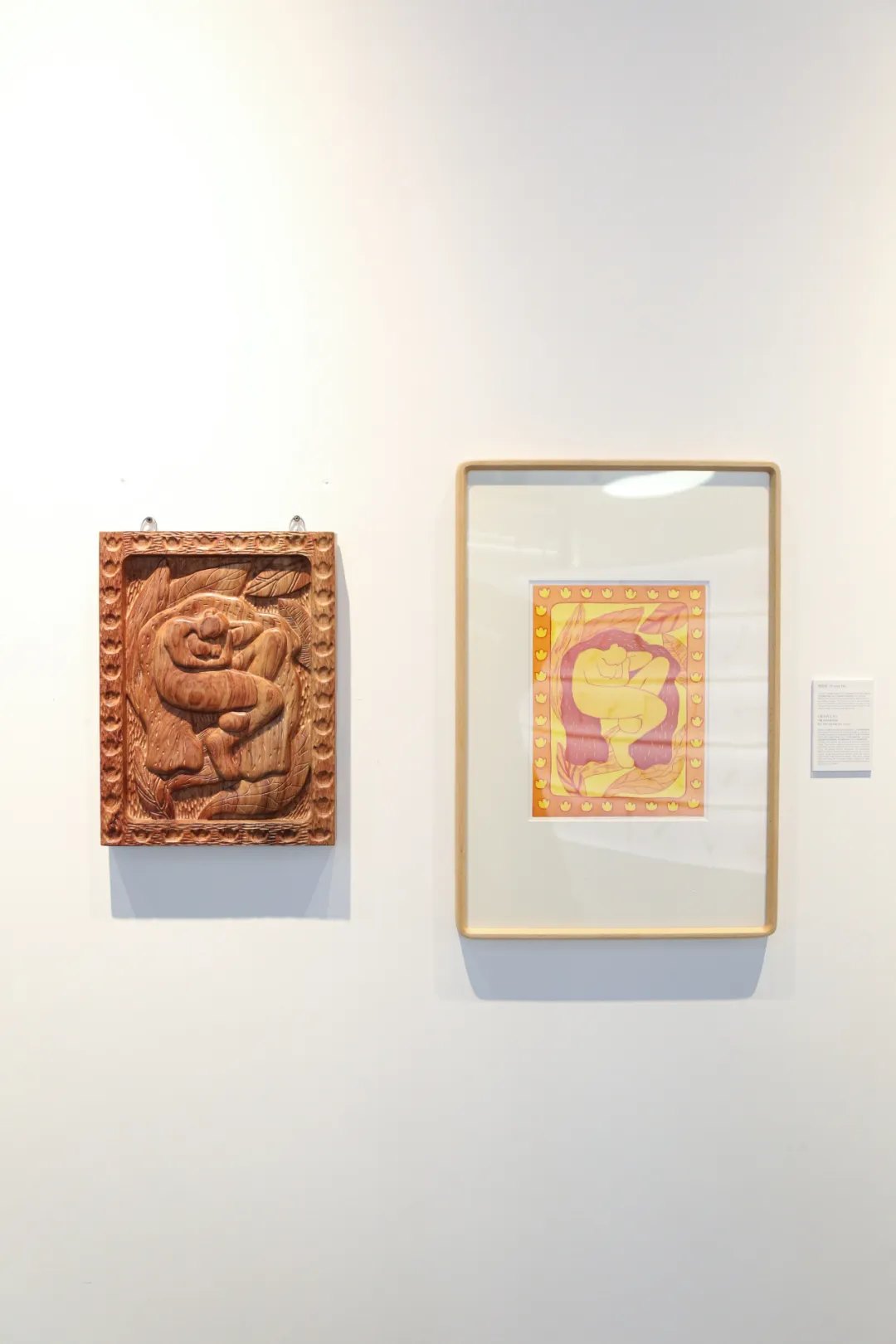
Annie He
Fire Flows in July
Wood carving, zinc-plate etching with ink wiping
Beech wood; zinc plate, oil-based ink, BFK Rives paper
Annie He’s Fire Flows in July explores the relationship between women and nature, at ease and at peace. The striking difference between California’s plant life and the east coast of mainland China, where the artist grew up, sparked the work, which takes nature and the female self as its theme. The artist uses different media and methods to turn a flat image into something with depth: a relief carved in beech wood, and zinc-plate etching from traditional intaglio printing, where ink wiping and etching bring out depth in the picture.
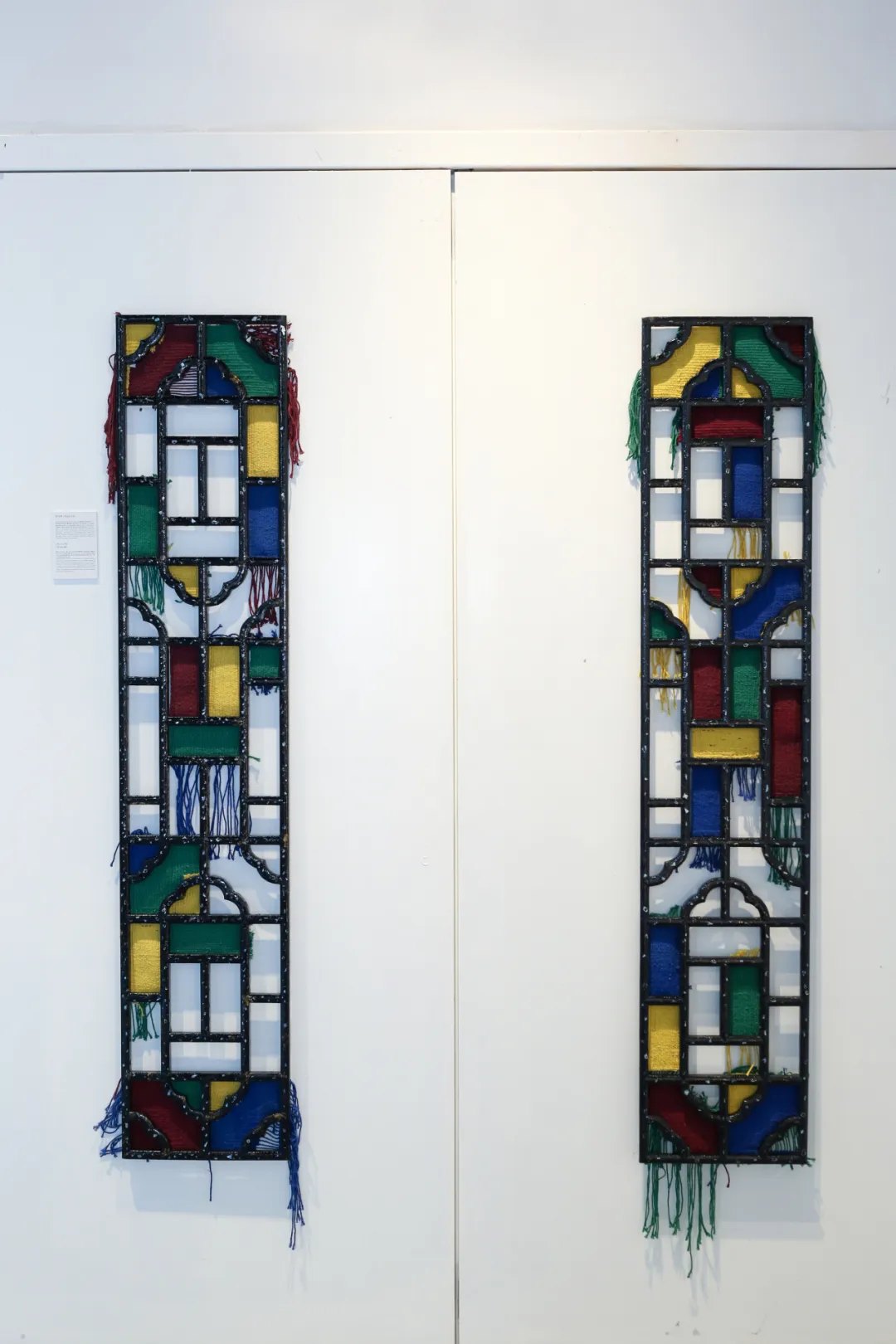
Fanyi Liu
Within a Few Square Inches
Lacquer, fiber, mother-of-pearl
Fanyi Liu’s Within a Few Square Inches is about window lattices: within a few square inches, one window holds a whole world. How romantic were the lattice windows of ancient China? In today’s world of steel and concrete it is hard to imagine. The window is a curtain between people and nature: it both separates and connects the person inside and the view outside. The separation is both practical and poetic; the connection offers a unique way of looking that is never cut off.

Elena Peng
Imperfect Perfect
Ceramics, knitting
Elena Peng’s Imperfect Perfect is a series of ceramic wall lamps that explores collisions between materials. The title means “the perfection of imperfection.” The work suggests that life is by nature dynamic and always changing, and that every moment is worth enjoying. This dynamic balance is a collision of complexity and simplicity that resonates with daily life and helps us find meaning and beauty in a life that is imperfect and intricate. Drawing on the softness of clay and its hardness after firing, Elena Peng chose porcelain to capture perfectly imperfect moments. She also uses textile as a second medium alongside the ceramics, bringing experimental surprises and imperfect moments.

Weiwei
Hibernation Series – Frost Flower – Lamp
Acrylic sheet, stainless steel, LED
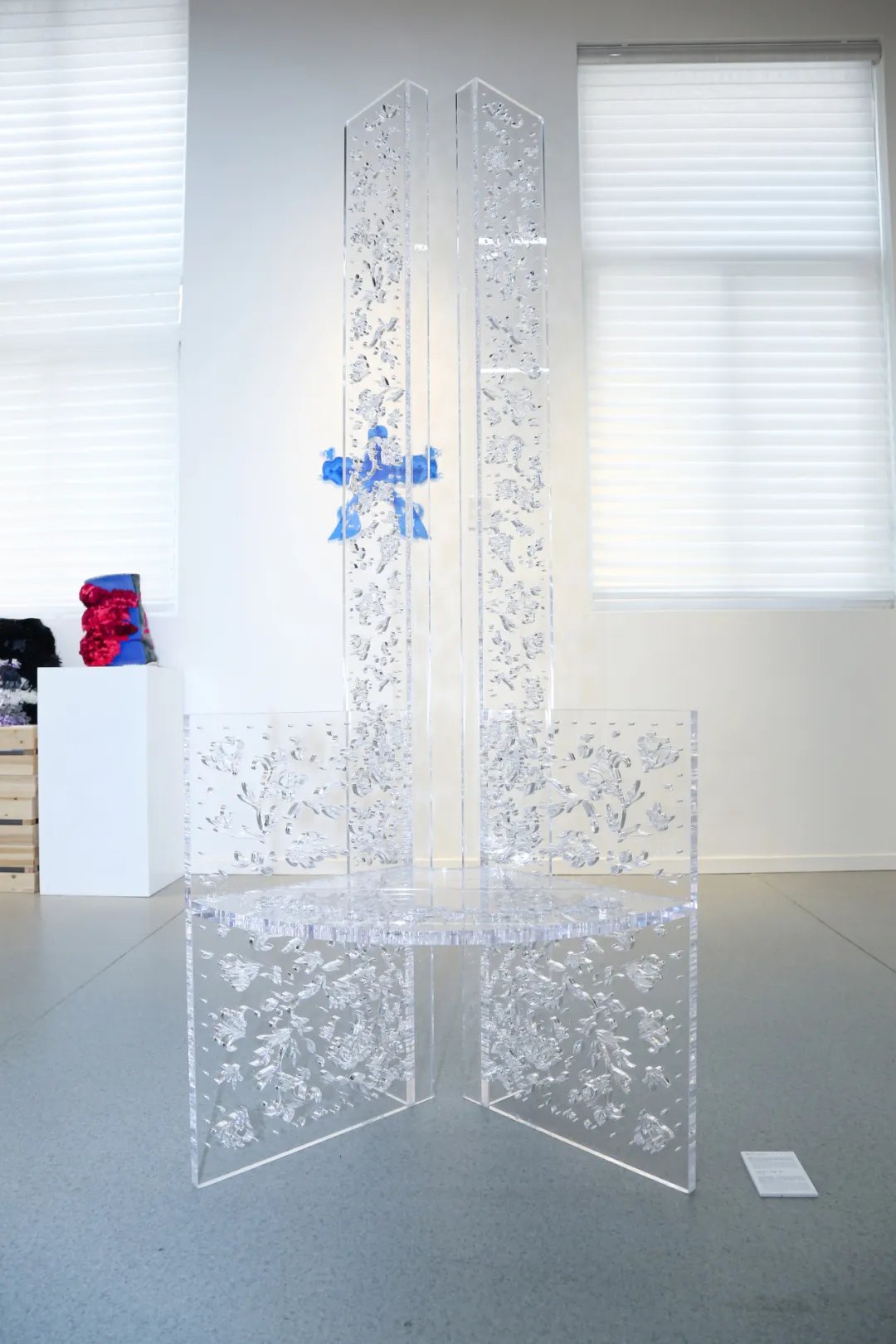
Hibernation Series – Rose – Chair
Acrylic furniture
Hibernation is a journey inward, a creative process of searching for the self. In her memory, the winter city is covered in snow, a sheet of silver white. Weiwei has designed an Arctic cruise ship and a desert oasis, and lives in the far north; all of this seems to point to a distant destination. In Hibernation Series – Frost Flower – Lamp and Hibernation Series – Rose – Chair, she weaves together herself, the polar regions, architecture and culture, capturing perfectly pure light through transparent materials.
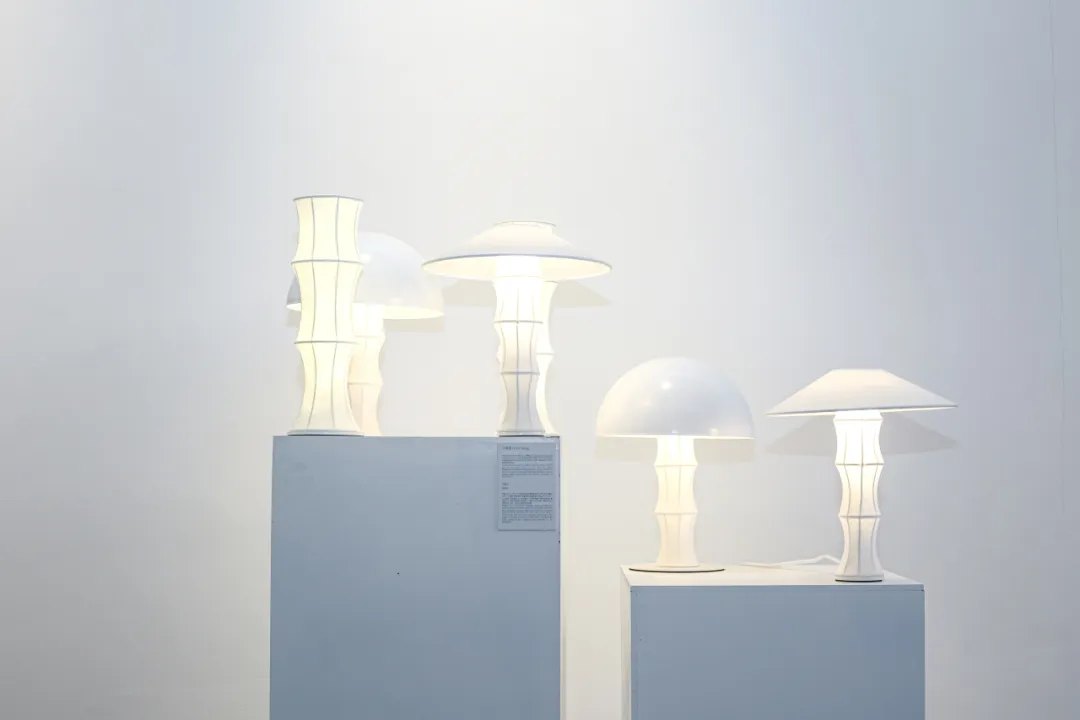
Funi Ding
Bamboo
Silk lamps
Funi Ding’s Bamboo lamp series draws on Yixing, home of the bamboo sea. The lamps take the form of bamboo, standing in frost and snow to light up the dark, warm and refined, a comfort to restless souls. This is especially true of bamboo, one of the “Four Gentlemen” of Chinese art: scholars compared people to bamboo, its quiet grace and firm joints standing for integrity, elegance and character. Silk is the main material of the lamps. One version pairs it with natural fiber, using hemp for a bamboo-hat-shaped shade; another pairs it with a metal shade.

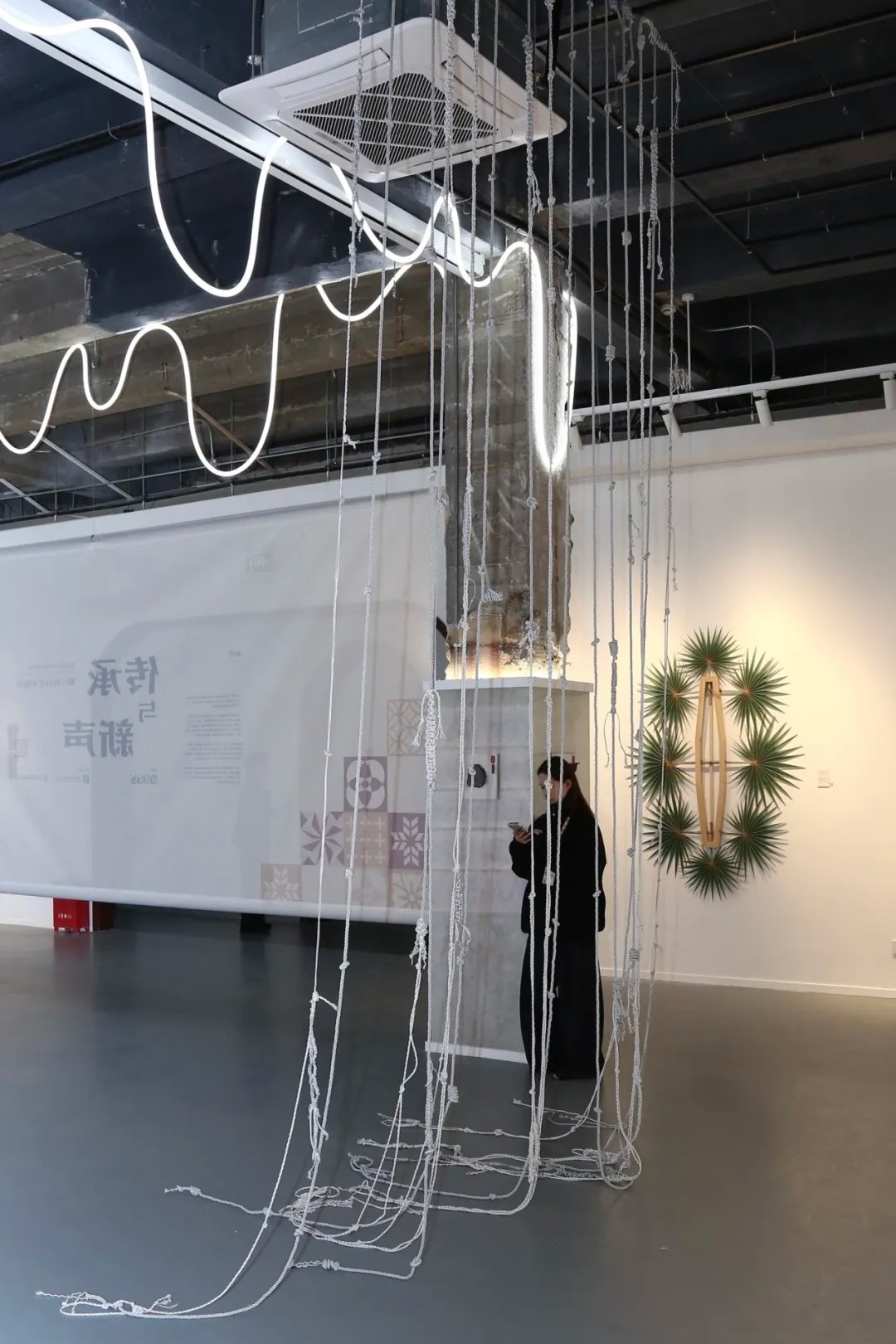
Yue Zhou
Celebration
Braided cord, glass yarn, balloons
Yue Zhou’s mother sells festive decorations, and Zhou got her first lessons in aesthetics from watching her mother choose products and plan color schemes for sale. In Celebration, her silver braided world draws on the ancient Chinese view of a round heaven and a square earth, and on poems in which the bright moon stands for longing, creating a woven work with a touch of fantasy that seems to extend without end.

Skye Zhang
Lacquered Cat Rhythm
Paper cut, spray paint
Skye Zhang’s Lacquered Cat Rhythm blends Chinese paper cutting with Western graffiti. Through images of cats doing extreme sports, it shows tradition passing into young, modern culture and the endless possibilities of art.

Yishao Jiemo / Meng Jin
Black Birds Grow Out and Twin Born
Shaped ceramic wall pieces
Black Birds Grow Out by Yishao Jiemo / Meng Jin sings: “Tears feed the roots, black birds grow out of the jungle; this is the jungle’s dream.”
Twin Born celebrates: “While we sleep here, we are awake somewhere else, so every one of us is two.”
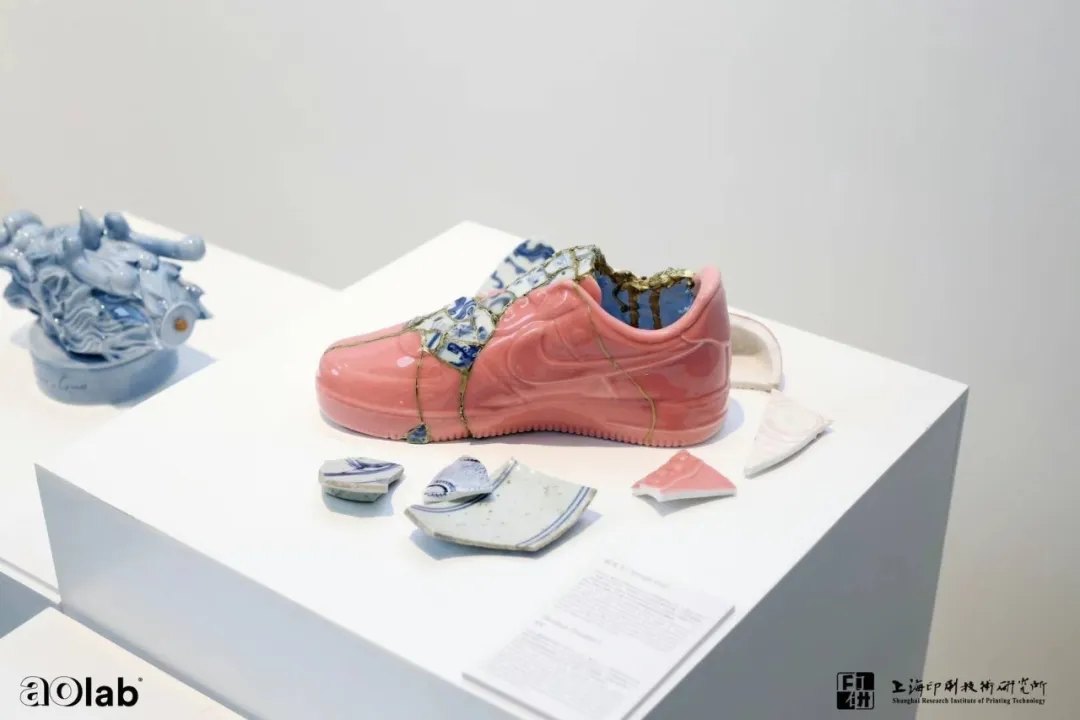
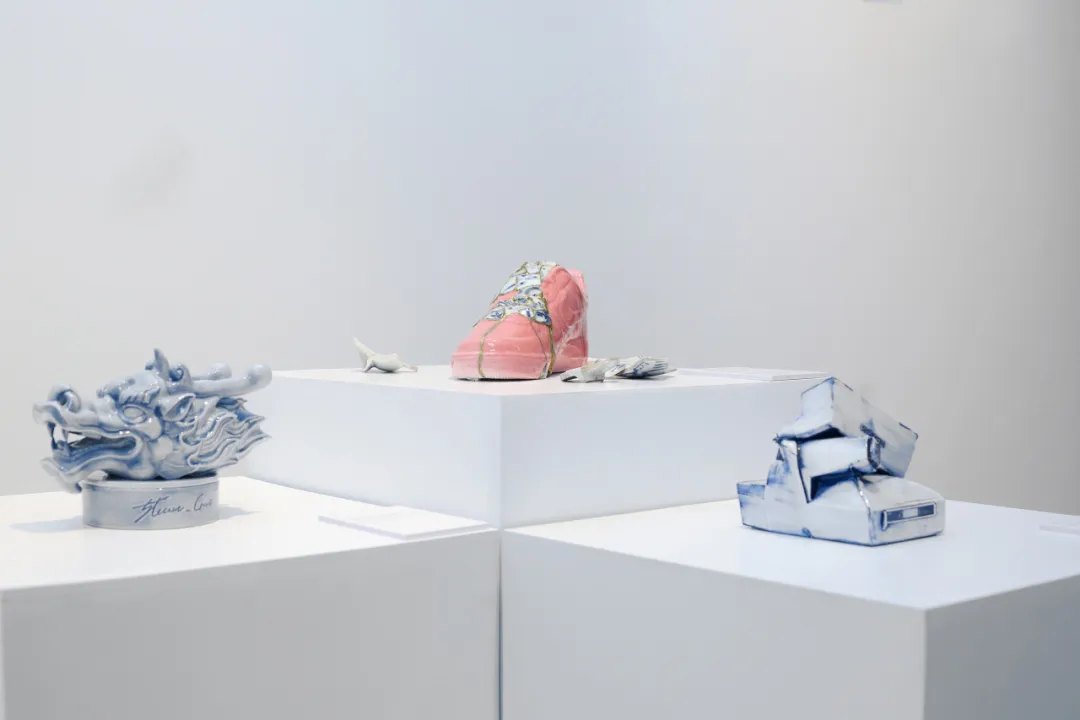
Steven Guo
Broken Sneaker, Polaroid, Year of the Dragon
Porcelain
Steven Guo’s Broken Sneaker makes a pair of AF1s from Qing dynasty porcelain shards, adding rich historical and cultural layers to the idea. The Qing dynasty (1644–1912) was an important period in Chinese history, and its cultural achievements include superb porcelain craft. In these shards lies a new story about the lasting legacy of Chinese culture and the endless creativity of human effort.
Polaroid: in a world flooded with fleeting digital images, the artist tries to recover the essence of memory: fragile, imperfect, yet lasting. So the artist set out to build a Polaroid camera not from steel and plastic but from delicate porcelain, a material as fleeting as the moments it captures.
Year of the Dragon is more than a tribute to the ancient dragon. It is a reflection on tradition and innovation, wrapped in the winding form of the mythical beast. Just as the dragon coils with timeless majesty, it also embodies the changing tides and steady progress of cultural evolution.
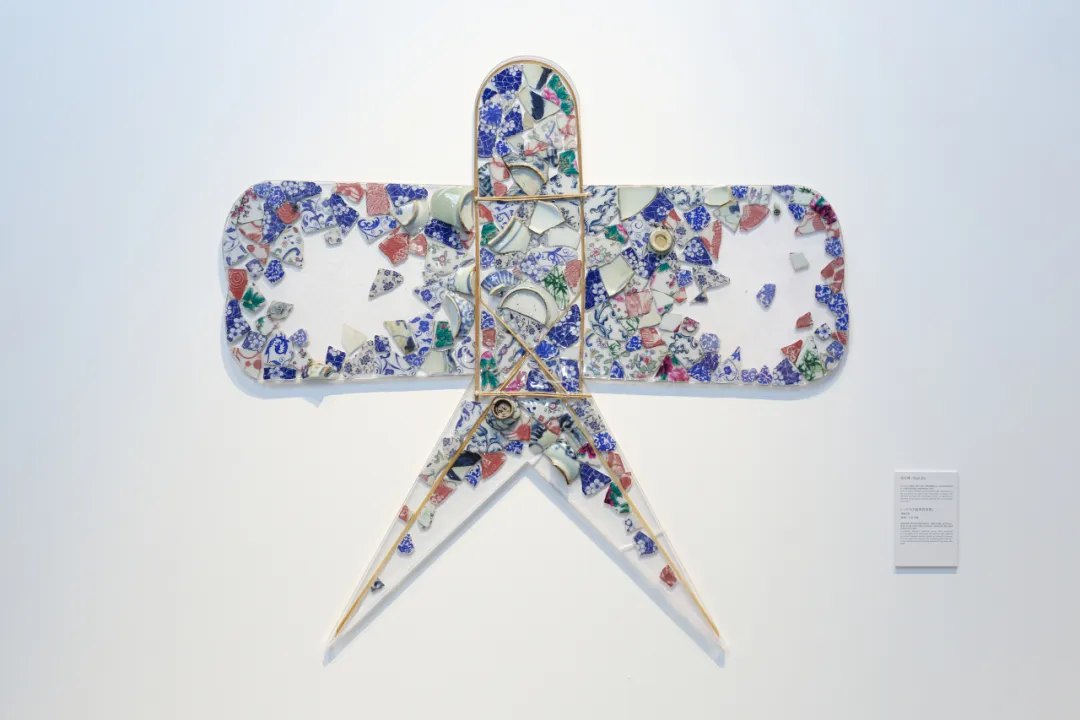
Paul Jin
A Kite That Cannot Fly
Ceramic kite
Porcelain shards, bamboo strips, resin
Paul Jin’s A Kite That Cannot Fly combines broken porcelain with the traditional Chinese paper kite. A quiet kite set with fine porcelain, gentle yet powerful. The kite longs for freedom but is always tied to a string; a beautiful porcelain kite will never fly.

Yifan Renxu
Pillow Vase – Zodiac Series: Dragon Raises Its Head
Ceramics, silver, pompoms
The second vase in Yifan Renxu’s zodiac series, this dragon-head vase combines ceramics, silver and pompoms. The dragon heads were made with a local master craftsman in Jingdezhen, using rigorous and complex techniques to cover the whole vase. Silver wire and pompoms make the overall form lighter and livelier.
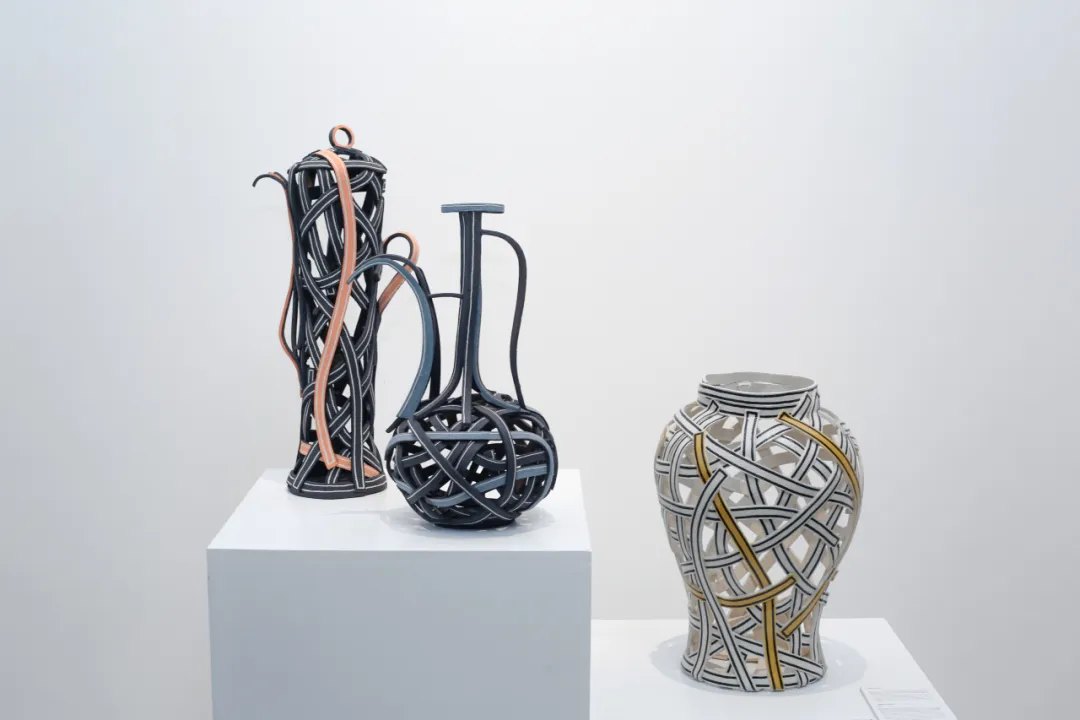
Luomi Fengdou Studio
Woven into Vessels
Ceramics
Luomi Fengdou Studio’s Woven into Vessels series rethinks traditional vessel forms, combining modern art with traditional Chinese shapes in a playful link between past and present. At first the series feels rational and restrained, carrying the solemn dignity of ancient Chinese vessel forms. With bold colors and freely winding clay coils, the studio adds a lively, playful note to the formal mood.
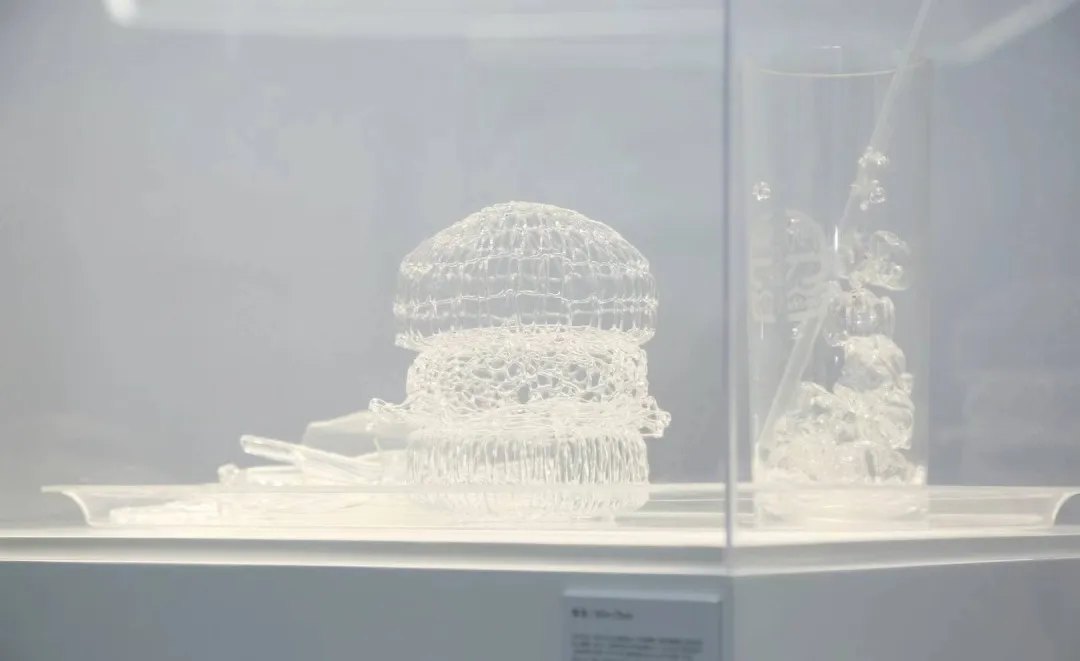
Min Chen
Zero-Calorie Meal
Glass, acrylic, PVC paper
Min Chen’s Zero-Calorie Meal is inspired by the wish to eat without counting calories. Using clear, inedible glass, it shows the absurdity of “no calories.” The zero-calorie meal sells a sweet dream to people who worry about calories: eat as much as you like and never gain weight. Behind it lie body anxiety, the idea that thin is beautiful, and a single standard of beauty. Hollow forms and transparent materials give the work a feeling of lightness: the food is made of glass, and the drinks keep only bubbles and ice, showing the idea of “no color, no taste, no calories.” The whole work is transparent, expressing the beauty messages we meet every day and the state of mind that comes with body anxiety.

Shuyu Ran
Placenta
Ceramic plates, porcelain painting
Maifan stone clay, color glaze, clear glaze
Shuyu Ran’s Placenta brings imagined creatures to life by carving them into clay plates. The artist invented the shapes of the plates to make them look more like a placenta that nurtures life, with the clay itself as the birthplace of living things.
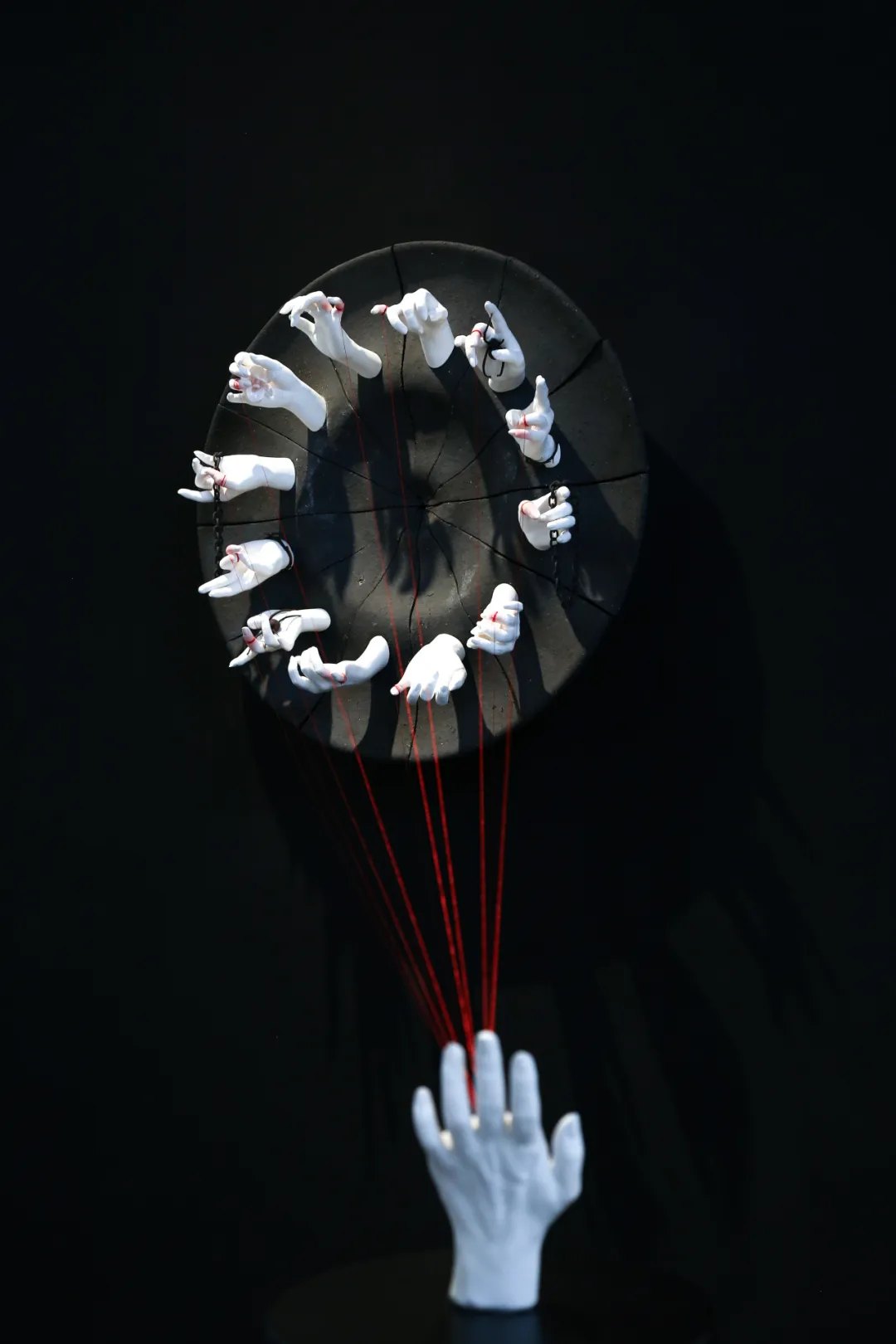
Dora Chen
Transference – Swallow Me Whole, 2024
White porcelain, black pottery, silk thread, magnets, wood and more
Fired at 1260°C in oxidation
Dora Chen created Transference – Swallow Me Whole, 2024. “Look straight at me, accept me; everything of everything and all of all.” The “me” here can be anything: the still point at the center of the world’s noisy whirlpool, the final place of return where stillness overcomes all change. Using suspended installation and blushes on the skin, the work quietly shows the connections between people, objects and space that cannot be touched yet always exist. Pink is a color of many sides, tender yet aggressive, intimate yet never quite passionate. It is reserved, like a bruise creeping onto the skin, arriving and leaving quietly. The pink comes from a chemical reaction between chromium oxide and tin oxide during firing; it is born of, and lives in, the subtle distances the artist keeps exploring.

Bing Feng
Knot
Digital image
Bing Feng’s Knot combines the features of snake-related mythical beasts from the Classic of Mountains and Seas with the form of the Chinese knot, creating a set of mysterious totems. Influenced by Western religious culture, snakes often seem evil in modern society, but in traditional Chinese culture they stand for good fortune, rebirth and wisdom. In this work they echo the endless interlacing of the Chinese knot, standing for change and eternity.

Funi Ding & Yue Zhou
PROJECT A
3D printing
PETG, PLA
Funi Ding and Yue Zhou’s PROJECT A is an ongoing experiment in home design and a design adventure built around artificial intelligence, rooted in imagining and pursuing endless possibilities. PROJECT A turns the traditional design process into an algorithm, merging the two artists’ distinct, abstract personal styles and evolving them into clusters in the digital world. In this way it bridges the gap between the virtual world and physical products, creating designs full of vivid texture and experimentation.
The tea-green chair from the “Ring” series shows how different materials can transform texture and feel. Color, form and texture give the chair a dynamic rhythm, like a visual symphony full of beat and melody, adding a unique artistic charm to the home.
The “Ou” vase series shows how fun and playful it can be to piece together materials and colors. Keeping the wavy striped texture, customers can choose the colors and printing materials for each section, adding a touch of playful color to the home.
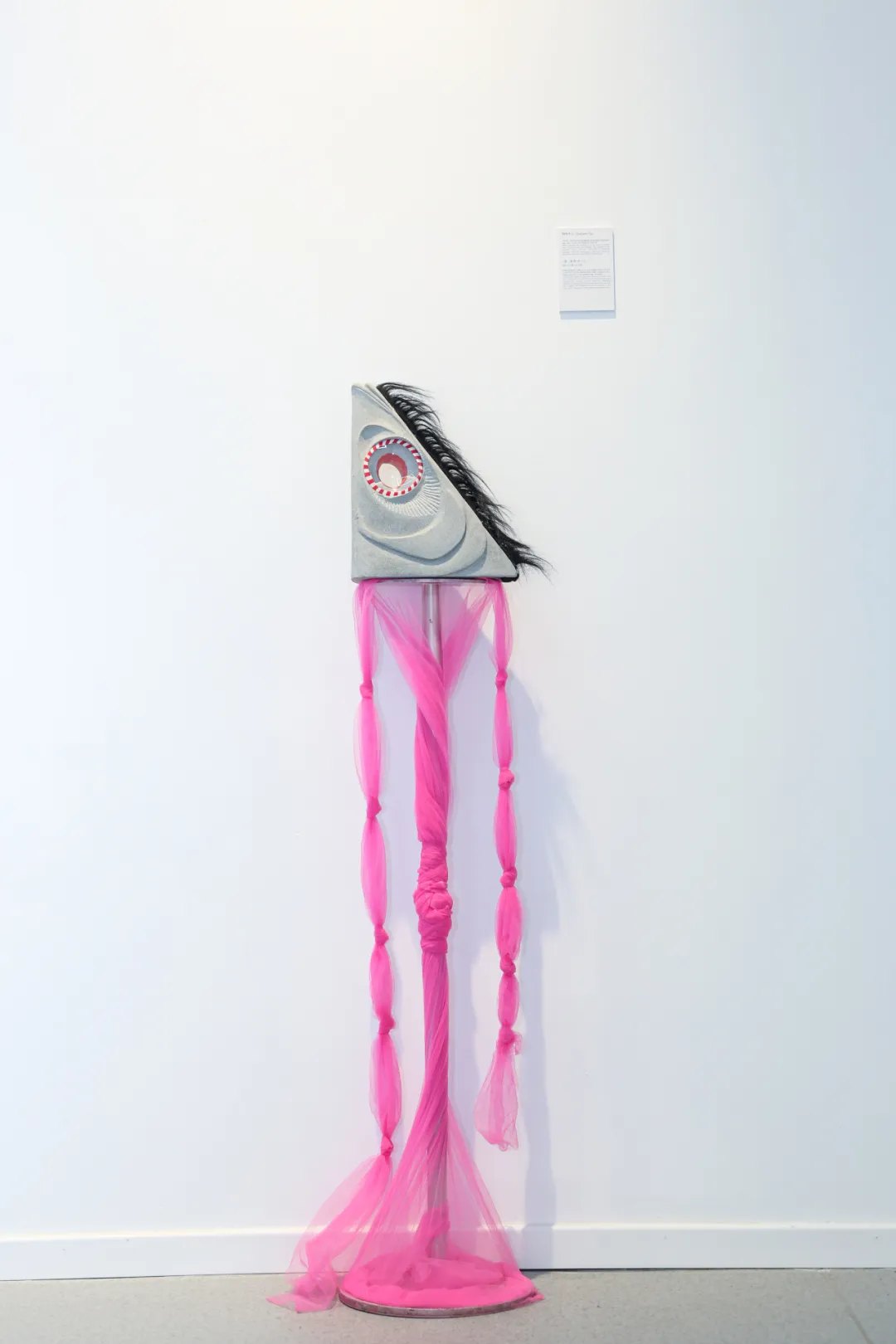
Qiujieer Tao
Second Vision (I)
Sandstone, magnifying glass, mixed media
So-called reality is judged and defined by ourselves. Qiujieer Tao’s Second Vision (I) uses surrealist methods to create a stone fish with a dull, vacant air. Through an inverted, out-of-focus magnifying lens, the eye drifts into illusion, hinting at a split between perception and reality at this stage of life, and the confusion that follows.

Maggie Wu
Cocoon Garden: Twin Phase
3D paper cut
Acrylic
Maggie Wu’s Cocoon Garden: Twin Phase tells of a cocoon garden born from people’s emotions and longings. Twin Phase is one scene in the garden: its petals overlap and consume one another, formed from the symbiosis and sacrifice found in close relationships.

Lujia Ye
Cohesion
Cyanotype fabric installation
Cotton, leather
Lujia Ye’s Cohesion is a new practice: she created a modular textile system related to “time,” to resist our fragmented behavior in the digital age and reconnect our sense of cohesion. A slow aesthetic, a playful approach and the language of materials are her ways of holding on to inner cohesion in an age of fragmented information.

Limin Chen
Plant Rhythm – Motion-Sensing Organisms of Plant Cells: Dynamic Textile Plants and Flowers
Interactive installation
Limin Chen’s Plant Rhythm is an interactive installation that uses the bionic principles of textiles to build the way energy passes along plant branches. It explores the life forms of plants and how plants interact with the world, studies mechanical motion, and uses the distance between viewers and the device as input. When viewers interact with it, the device is woken to “breathe,” guiding them to feel breath and interaction and helping us connect with the rhythm of nature.

Shiyu Chen
Flower Flips into Shadow
Digital media
Paper flip flowers are a traditional Chinese paper craft. Shiyu Chen’s Flower Flips into Shadow sets out to rebuild the art of the flip flower in the digital world: flowers within flowers, flowers turning into flowers, graceful and lifelike.

Alana Zhang
Beneath the Mask
Multimedia interactive installation
Alana Zhang’s Beneath the Mask is an interactive installation made of several AR filters, experimental videos and 3D-printed masks. It imagines new forms of expression born when the painted faces of traditional Chinese opera meet computer language. By interacting with the AR digital masks, viewers come to know traditional culture and new ways of carrying it forward.

Shijing Yu
SOFT VASE 5 – Soft Vase from Recycled Garment Trims
Cotton thread; acrylic yarn; chenille yarn; recycled garment trims (chiffon, beads, ribbon, lace)
SOFT VASE 4 – Soft Vase from Recycled T-shirts
Cotton thread; raffia; cotton rope; acrylic yarn; recycled T-shirts (fabric, labels)
SOFT VASE 3 – Soft Vase from a Recycled Sweater
Cotton thread; acrylic yarn; Icelandic wool; wool roving; a recycled Max Mara sweater
Shijing Yu’s SOFT VASE 5: in garment production, cutting fabric creates waste to varying degrees. Many designers try to reduce this waste through their designs, yet decorating garments also leaves a lot of trims behind. Shijing Yu collected lace, beads, chiffon ribbons and other materials and wove them into patterns by hand using traditional techniques, giving discarded materials new life.
SOFT VASE 4: with the growth of the internet, the ease of online shopping and low prices have made demand for clothing larger and larger, and clothing waste has grown more serious with it. A garment worn for a full season already counts as well used, and every year our closets throw out many pieces. Shijing Yu collected several T-shirts about to be thrown away, cut them into strips and joined them into balls of fabric, then wove them with traditional hand tapestry techniques so these fabrics live on in a new form. On the other side of the vase she uses natural raffia, whose bold texture brings a natural effect that contrasts with the clothes thrown away by modern society.
SOFT VASE 3: this soft vase began with a Max Mara sweater that was about to be thrown away, remade through flocking, hand weaving and embroidery, turning the old into the new. Collecting the waste from everyday work and redesigning it with traditional hand weaving, she turned these fabrics into pieces with a strong sense of design and the warmth of handwork.

Jiahui (Georgia) Chen
Kite
Acrylic installation
Jiahui (Georgia) Chen’s Kite tries to bring back a memory the artist treasured as a child: kites drifting in the sky. Building on the shape of the traditional paper kite, it looks again, through the eyes of the kite and with boundless imagination, at the clear blue sky of childhood.

Jinjin
Interlock
Polyester
Jinjin’s Interlock takes natural plant patterns as its inspiration for flat pattern and graphic design, breaking patterns apart and recombining them through modular design. Hand dyeing explores the beauty of color and pattern composition.
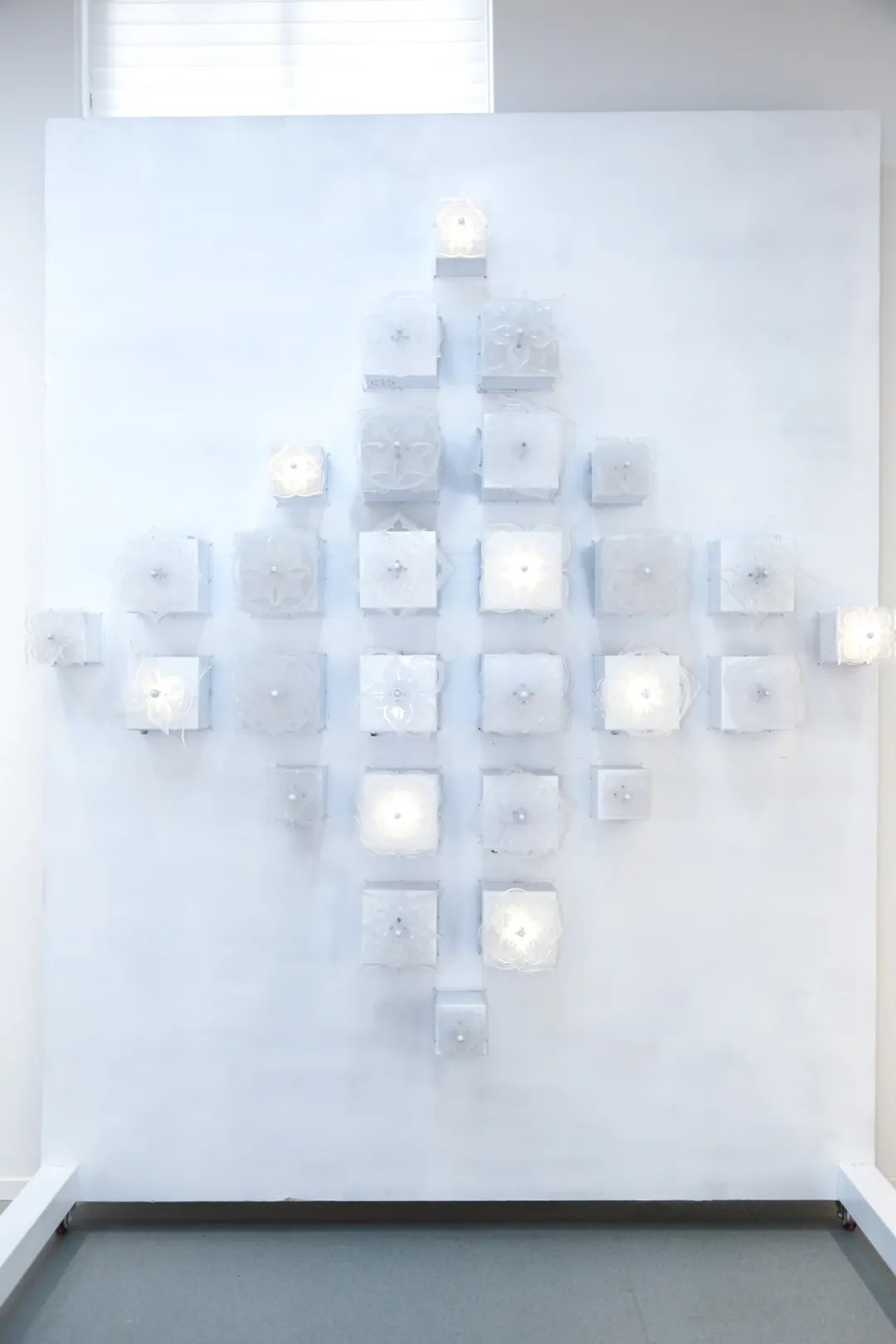
Zimeng Tao
Persimmon Shadows, Layered Flowers
Decorative art / product / installation
Acrylic, metal and other mixed materials
Auspicious objects are made by piecing together the best moments of real life; they carry people’s hopes and blessings and stand for welcoming good fortune. Zimeng Tao’s Persimmon Shadows, Layered Flowers neither blindly revives traditional culture nor chases today’s trends. It uses the flowing, light-filtering quality of paper window flowers to bring the two together, renewing the window flower with the persimmon calyx pattern and reinterpreting the culture of auspicious objects.


Heritage and New Voices Photography Special: Sun
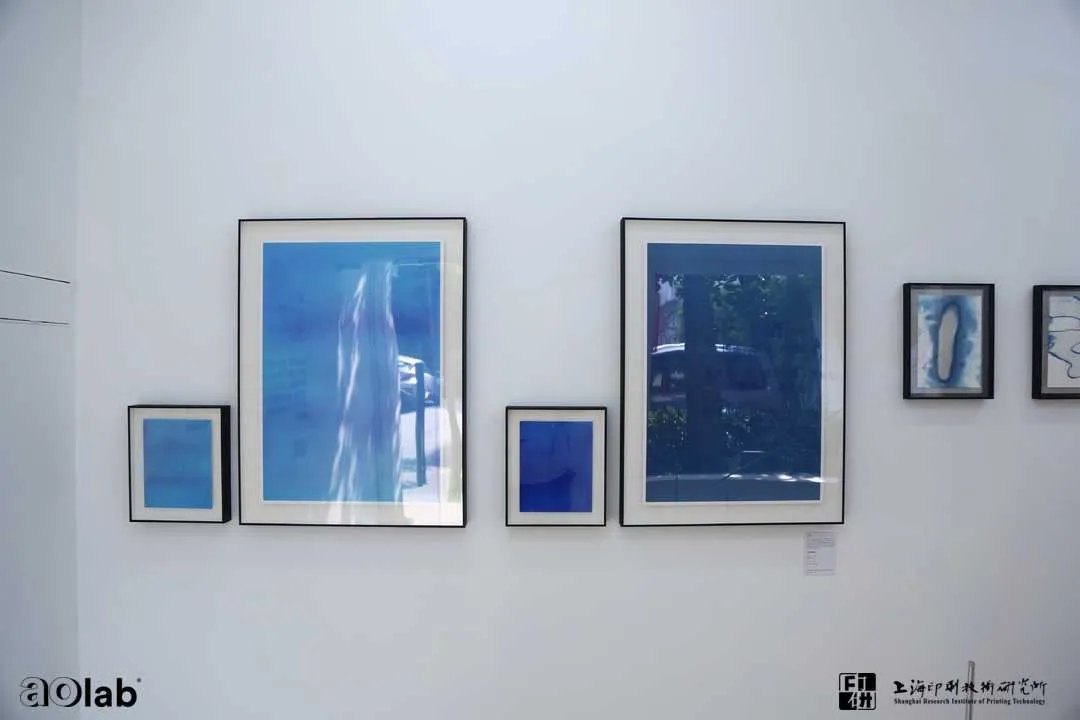
Curated by Yangyi Chen, the photography special uses traditional photographic processes as its medium, bringing together photography, installation and other forms by three artists. Under the theme of “sun,” it explores the beauty of light and shadow, shares reflections on nature and the human world, and brings traditional photographic processes back into the sunlight.
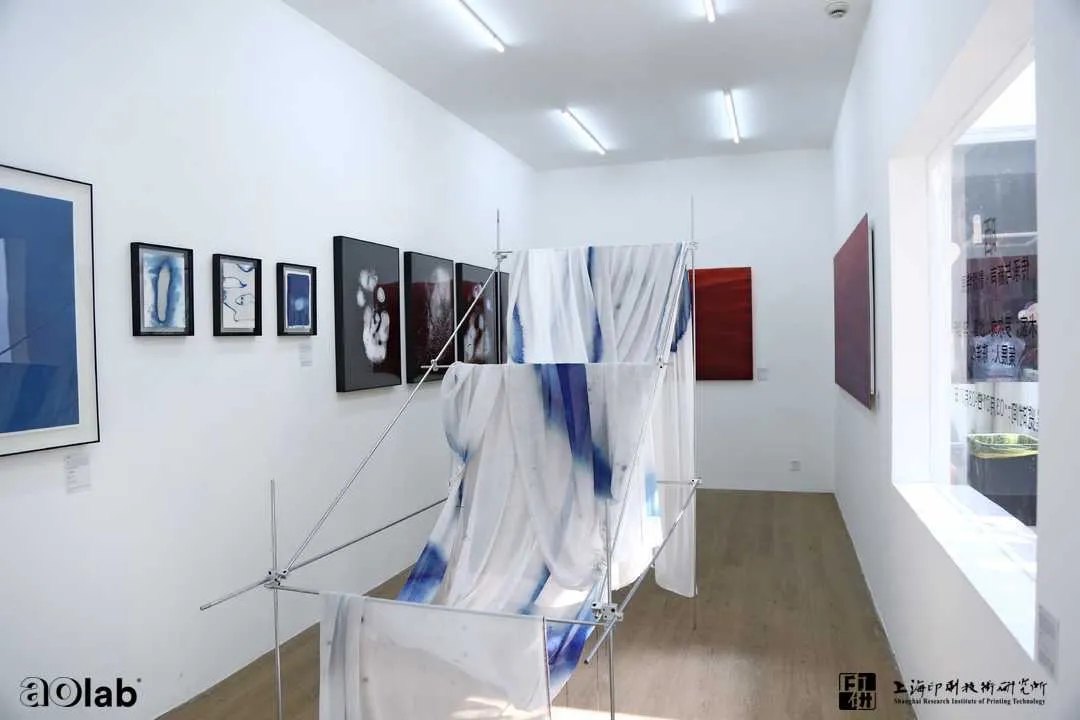
Ercheng Luo
Bubbles
Cyanotype
Foam is hard to preserve in its natural state. Ercheng Luo’s Bubbles records how foam changes through cyanotype. The project follows natural changes in the waters of the Jiangnan water towns, collecting foam from waters around Suzhou to record it.
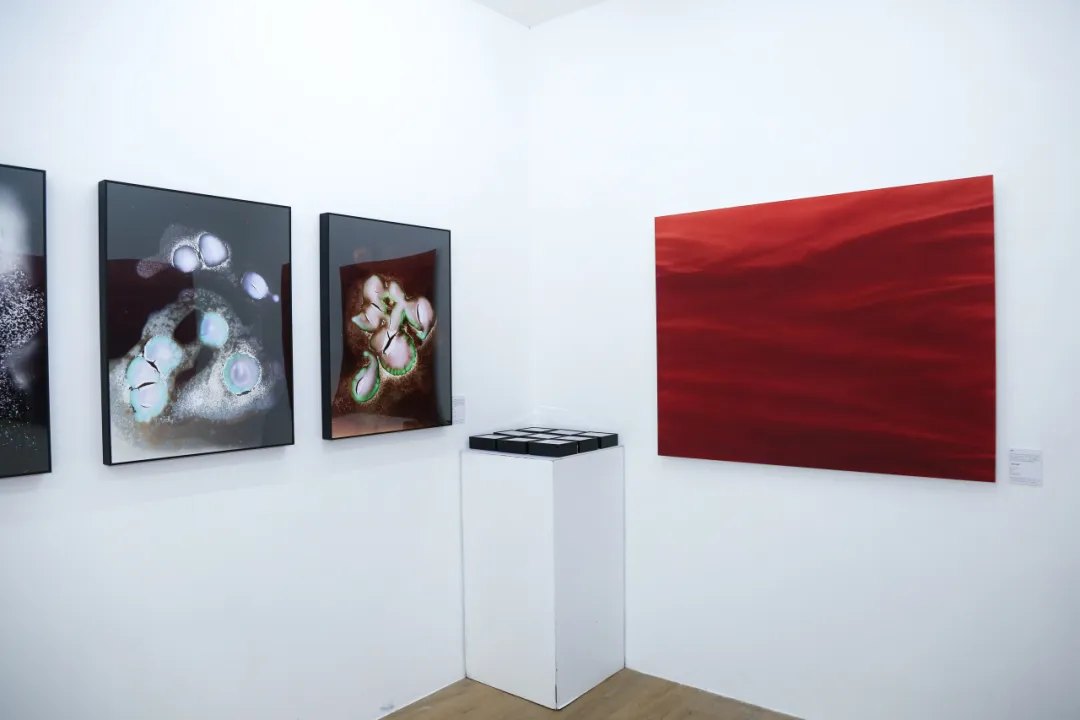
Mo Sha
False Landscapes
Photography
In False Landscapes, Mo Sha takes all kinds of materials, mostly everyday objects, makes them look like real landscapes and photographs them. With a plastic bag, for example, Mo Sha borrows the form of a landscape and exposes the bag directly onto traditional printing-out paper, making an image of the bag itself. Mo Sha tries to make the plastic bags look beautiful and serene, but that beauty is an illusion: beneath the lovely mountains and waters lies trash that pollutes the environment. Through this form Mo Sha expresses a view of what is happening to our environment today. These landscapes should be elegant and peaceful, yet now they feel more ironic and awkward.
Jiaxin Li
Soundscape
Photography

Growing Fungi
Photography

The Use of Objects
Glass bricks / photography
In Soundscape, Jiaxin Li links the six songs the artist played most in 2022 to the three primary colors red, green and blue. The length of each song and the strength of the light decide the marks the light leaves on photographic paper. In turning sound into image, the artist builds a bridge between music and photography: notes become light, and light passes into the light-sensitive material. The faint traces on the paper show how each song differs, and they also hold the feelings and tastes the artist had in 2022.
Growing Fungi: film is a container that holds the information light leaves in the photographic emulsion; through a set developing process, it becomes the kind of image people are used to. When film is damaged, the light information it holds is incomplete, beyond what people expect. In photography, poorly stored film often grows mold that damages the image. Jiaxin Li sees it the other way: as a container, film can hold more than light; it can also be a culture dish for fungi. Using a single-purpose object in an unfamiliar way is key to how the artist understands images. By growing different fungi on negatives and then developing them outside the normal process, the artist makes images that break with how people usually see images. This fits Flusser’s idea that images are “significant surfaces,” ambiguous “complexes of symbols” and “complexes of meaning.” Such images blur perception and open another possibility for making images.
The Use of Objects: glass bricks are beautiful, fragile objects. The artist sent these bricks to people who were an essential part of growing up, people with whom the artist once shared precious time. As time passed they all went to different places, and the distance between them became not only physical but also emotional. Like their friendships, the bricks are beautiful and easily broken. The artist mailed the bricks to them and asked them to send them back; when the bricks returned, the artist marked them with clear labels and photographed them. The cracks and missing pieces from the repeated journeys are the traces left along the way. The marks left by journeys and places, confirmed by both the damage to the objects and the images, finally form the journey of the objects. The longer the shipping, the more cracks appear in the bricks, and some are even lost on the way. These different marks become traces of the journey, and traces of the artist’s friendships.
Exhibition information
Dates
March 1–31, 2024
Exhibition hours
12:00–19:00
Venue
Character Space, 1st Floor, Shanghai Printing Technology Research Institute, No. 60, Lane 1209, Xinzha Road, Jing’an District, Shanghai
Photography special
D-101, No. 60, Lane 1209, Xinzha Road, Jing’an District, Shanghai
Co-organizers
Shanghai Printing Technology Research Institute
Shanghai Printing Font Exhibition Hall
About the venue
Founded in 1956, the Shanghai Printing Technology Research Institute is the birthplace of modern Chinese printing typefaces. Its Character Space is Shanghai’s first multi-use cultural space themed on type culture. With the Chinese character as its subject and space as its medium, it brings together academic talks, cultural salons, an art gallery, exhibition and interactive spaces, a creative space, light dining and a café. Through immersive “flow” experiences, it aims to share type culture centered on Chinese characters, respond to the needs of society and contribute to China’s cultural and publishing industry.
Organizer
aolab (Assorted Objects Design Consulting Co., Ltd.)
aolab, short for Assorted Objects Lab, is a multidisciplinary design studio that seeks out cutting-edge design and creative talent. The team’s international backgrounds have earned awards such as iF, A’ Design and German Design, and features in ELLE and Wallpaper. Guided by the motto “not defined, not restricted,” aolab welcomes talent from everywhere, gives creative people an open platform and matches brands with the right resources. aolab offers three integrated design services: branding, product design and event planning. Through innovation in both aesthetics and business, it helps brands express their value and create forward-looking design.
Credits
Curated by aolab (Assorted Objects Design Consulting Co., Ltd.)
Lead curator: Haidy Gong
Curatorial team: Yue Zhou, Yue Miao
Media: Nicole Yan
Visual design: Ellie Wang
aolab design lab brings together all kinds of interesting people. Here ideas collide and spark a kind of chemistry, creating designs that show a unique attitude to life.